
Introduction
Solar energy has emerged as a pivotal source of renewable power, capturing the sun’s rays to generate electricity and thermal energy. Its relevance stems from its abundant availability, minimal environmental impact during operation, and potential to significantly reduce greenhouse gas emissions. As we delve into the world of solar-energy, readers will uncover the intricacies of this clean power source, its global impact, economic implications, technological advancements, and the policies that shape its future.
Understanding Solar-Energy
Solar energy harnesses the sun’s radiation using photovoltaic (PV) cells or solar thermal collectors. The core components of a solar power system include solar panels, an inverter (for PV systems), a charge controller (for solar thermal systems), batteries for storage (if needed), and wiring to connect these elements.
The history of solar-energy dates back to the 19th century when scientific experiments demonstrated the photoelectric effect. However, it wasn’t until the 20th century that practical applications emerged, leading to the first solar cells developed by Bell Labs in the 1950s. Since then, solar technology has evolved from expensive, low-efficiency panels to high-efficiency, cost-effective solutions that are transforming energy landscapes worldwide.
Solar energy’s significance lies in its potential to meet a substantial portion of global energy needs sustainably. It can be deployed at various scales, from small residential setups to large utility-scale power plants, and has the capability to electrify remote areas, power satellites, and support heating and cooling systems.
Global Impact and Trends
The global solar-energy market has seen exponential growth, with an increasing number of countries integrating it into their energy portfolios. The International Energy Agency (IEA) reports that solar power capacity grew by 14.8% in 2021, reaching a total of approximately 735 gigawatts (GW). This growth is driven by technological advancements, declining costs, and the urgent need to mitigate climate change.
Different regions are affected by solar trends in unique ways. For instance, the Middle East and North Africa (MENA) region, with its high solar irradiance, has some of the world’s highest solar capacities per capita. Countries like Saudi Arabia and the United Arab Emirates are investing heavily in solar to diversify their energy sources.
In Europe and the Americas, solar energy is becoming increasingly competitive with fossil fuels, supported by favorable policies and a push towards decarbonization. China remains a significant player, not only as a producer of solar panels but also as a large-scale adopter of solar technology.
Economic Considerations
The economic aspects of solar-energy are multifaceted, influencing energy markets, investment patterns, and the overall energy mix. The cost of solar technology has plummeted over the past decade, making it one of the most cost-competitive sources of energy in many parts of the world. This cost reduction is primarily due to technological advancements, economies of scale, and competitive market dynamics.
Investment in solar projects has been a boon for economic development, creating jobs and stimulating growth in sectors like manufacturing, construction, and maintenance. Solar-energy also offers a hedge against fuel price volatility, as sunlight is free and abundant.
However, the integration of solar energy into existing power grids requires significant investment in infrastructure and grid management technologies to handle the intermittent nature of solar power. Moreover, policy frameworks that support renewable energy through incentives, tax credits, and feed-in tariffs play a crucial role in the economic viability of solar projects.
Technological Advancements
The technological evolution of solar-energy is marked by several key advancements:
-
Photovoltaic Efficiency: Researchers have increased the efficiency of PV cells, with some achieving over 25% efficiency. This leap in efficiency means more electricity can be generated from a given area of solar panels.
-
Solar Energy Storage: Advancements in battery technology are addressing the challenge of energy storage, allowing for the use of solar power even when the sun isn’t shining. Innovations like flow batteries and solid-state batteries promise to enhance storage capacity and reduce costs.
-
Bifacial Solar Panels: These panels can capture sunlight from both sides, increasing their energy yield and efficiency.
-
Floating Photovoltaics (FPV): FPV systems are installed on bodies of water, conserving land space and reducing water evaporation and algae growth.
-
Building-Integrated Photovoltaics (BIPV): BIPV integrates solar cells directly into building materials, turning buildings into power generators.
-
Perovskite Solar Cells: These cells offer higher efficiencies and lower production costs compared to traditional silicon cells. However, they are still under development for commercial use due to durability concerns.
Future potential includes the integration of solar energy with artificial intelligence for optimized energy production and predictive maintenance, as well as the development of quantum dot solar cells.
Policy and Regulation
Global solar-energy growth is influenced by a mix of supportive policies and regulatory frameworks. The European Union’s Green Deal and various member states’ renewable energy targets are driving investment in solar. Similarly, the United States has implemented tax credits under the Inflation Reduction Act to boost solar deployment.
China’s policy approach has been instrumental in its rapid expansion of solar capacity, with clear targets for solar installation and support for research and development. India’s National Solar Mission aims to achieve 100 GW of solar power by 2022.
Effective regulatory frameworks that streamline permitting processes, offer stable policy environments, and provide incentives for renewable energy are critical for the continued growth of the solar sector.
Case Studies
-
United States: The US has seen significant growth in utility-scale solar farms and rooftop installations, with states like California leading the way. Innovative financing models, such as power purchase agreements (PPAs), have facilitated this expansion.
-
China: China’s solar capacity more than tripled between 2015 and 2020, largely due to government incentives and targets for clean energy consumption.
-
India: India’s aggressive solar targets have led to the creation of large-scale solar parks and the adoption of rooftop solar systems across residential and commercial buildings.
-
MENA Region: Countries like Saudi Arabia and the UAE are investing in mega-solar projects, leveraging their high solar irradiance levels to become global leaders in solar energy production per capita.
Social Impact
Solar-energy projects can have a positive social impact by creating local jobs, reducing electricity costs for consumers, and promoting energy independence. They also offer opportunities for communities to engage with clean energy technologies, including educational programs and community-owned solar initiatives.
The social acceptance of solar projects is crucial for their success. Engaging with local communities, ensuring fair labor practices, and demonstrating the benefits of solar energy can help overcome any resistance and foster a supportive environment for solar development.
Challenges and Considerations
Despite its many advantages, solar-energy faces several challenges:
-
Intermittency: Solar power is not continuously available; it must be integrated with energy storage solutions or combined with other energy sources to ensure a reliable electricity supply.
-
Resource Availability: While sunlight is abundant, the best locations for large-scale solar farms are limited by geography and land use. Innovations like agrivoltaics—integrating solar panels with agricultural land—are addressing this issue.
-
Infrastructure: Upgrading existing power grids to handle increased solar capacity requires significant investment. Smart grid technologies can help manage the distributed nature of solar power.
-
Market Dynamics: Competition from other renewable sources, like wind and nuclear, and the fossil fuel industry can influence the development of solar projects.
-
Policy and Regulatory Barriers: Uncertain policy environments and bureaucratic hurdles can delay or halt solar projects. Clear, stable policies are essential for long-term investment certainty.
Future Outlook
The future of solar-energy looks promising as technology continues to advance and costs continue to fall. The goal of many countries is to achieve grid parity, where the cost of electricity from solar is equal to or less than that from conventional sources. With ongoing research and development, the integration of artificial intelligence, and supportive policies, solar-energy is expected to play a significant role in the global transition to renewable energy sources.
The potential for solar-energy to expand into new markets and applications is vast. Innovations in materials science, energy storage, and system integration will further enhance its efficiency and reliability. As the world increasingly recognizes the importance of sustainable energy solutions, solar-energy stands out as a key technology for meeting future energy demands while mitigating the impacts of climate change.
Conclusion
Solar-energy has come a long way since its early scientific experiments and has become a cornerstone of the global transition to renewable energy. Its economic, social, and environmental benefits are clear, but challenges remain in terms of resource availability, intermittency, and policy certainty. As we look to the future, solar-energy’s trajectory is one of continued growth, innovation, and impact, with the potential to reshape our energy landscape and contribute significantly to a sustainable planet. The ongoing commitment to research, development, and supportive policies will be critical in realizing solar-energy’s full potential.
Solar Energy is a vital tool in combating climate change, offering clean, renewable power with global benefits like reduced greenhouse gas emissions. Locally, it provides affordable energy to remote areas and enhances resilience. To maximize its potential, investment in infrastructure, incentives for panel installation, technological advancements, and education are crucial. Global adoption, as seen in India and Europe, creates jobs and drives economic growth while moving towards a sustainable future powered by Solar Energy.
Climate change, an urgent global challenge, demands innovative solutions to reduce our carbon footprint. The primary driver of this crisis is the burning of fossil fuels, releasing greenhouse gases into the atmosphere. Herein lies the critical role of solar energy as a natural alternative. By harnessing the power of the sun, we can significantly mitigate climate change’s impact. Solar energy, a renewable and abundant resource, offers a sustainable path forward. This article delves into the transformative potential of solar energy, exploring its capabilities to combat climate change, reduce emissions, and foster a greener future. We examine cutting-edge technologies, global adoption trends, and the economic benefits that make solar energy a game-changer in our quest for a more resilient planet.
Understanding Solar Energy's Potential in Mitigating Climate Change

Solar energy, harnessed from the sun’s abundant and renewable rays, stands as a powerful ally in our fight against climate change. Its potential to mitigate environmental impacts is profound, offering a sustainable alternative to fossil fuels. As we navigate the challenges of a rapidly changing climate, understanding and harnessing solar energy’s capabilities are more crucial than ever. This energy source has the unique advantage of being accessible worldwide, making it a game-changer in the transition towards a greener future.
The role of solar energy in combating climate change is multifaceted. On a global scale, adopting solar technologies contributes to reducing greenhouse gas emissions by offering a clean and emission-free electricity generation method. According to recent studies, the widespread implementation of solar panels could significantly decrease carbon dioxide levels, playing a vital role in meeting international climate goals. For instance, countries like Germany and Australia have witnessed substantial declines in carbon emissions due to their robust solar energy programs. This success highlights the potential for global communities to embrace solar as a viable solution to combat rising temperatures.
Moreover, solar energy has significant local benefits. It empowers communities by providing access to affordable and reliable electricity, particularly in remote areas with limited infrastructure. Solar-powered systems can offer independence from traditional energy grids, ensuring resilience during natural disasters or power outages. For example, many off-grid communities have successfully adopted solar panels for lighting, water pumping, and even charging electrical devices, improving their quality of life and reducing their environmental footprint. By harnessing the power of the sun, these regions contribute to global efforts while achieving local sustainability.
To maximize solar energy’s potential in mitigating climate change, governments, businesses, and individuals should consider proactive steps. Encouraging investment in renewable energy infrastructure, offering incentives for solar panel installation, and integrating solar education into curricula can drive widespread adoption. Additionally, advances in technology, such as more efficient panels and improved energy storage systems, will further enhance the viability of solar energy. By embracing these strategies, we can unlock the full potential of solar energy, paving the way for a sustainable and resilient future.
Strategies: Leveraging Solar Power for a Sustainable Future
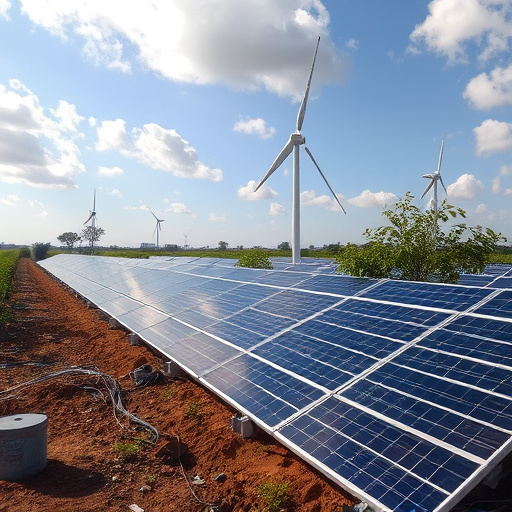
Solar energy has emerged as a powerful tool in the global effort to combat climate change. As we face the urgent need for sustainable energy solutions, leveraging solar power is no longer an option but a necessity. The strategic implementation of solar energy technologies offers a pathway towards reducing greenhouse gas emissions and mitigating the impacts of a changing climate. One of the key strategies involves transitioning to solar-powered electricity generation as a clean and renewable alternative to fossil fuels.
The rapid advancements in solar panel efficiency and technology have made it feasible to harness solar energy on a large scale. For instance, the cost of photovoltaic (PV) panels has decreased significantly over the past decade, making them more accessible for residential, commercial, and industrial applications. This shift towards decentralized energy production allows communities to become less dependent on traditional power grids, reducing transmission losses and enhancing energy security. Moreover, integrating solar energy into urban infrastructure can lead to the development of smart cities that efficiently manage energy consumption and distribution.
On a global scale, governments and international organizations are recognizing the potential of solar energy as a mainstream solution. Many countries have set ambitious targets for renewable energy adoption, with solar power at the forefront. For example, India has aimed to install 450 GW of solar capacity by 2030, while several European nations have committed to achieving climate neutrality by leveraging extensive solar energy networks. These efforts not only contribute to reducing carbon emissions but also create new job opportunities and stimulate economic growth in the renewable energy sector. By combining policy incentives, technological innovations, and public-private partnerships, it is feasible to accelerate the transition to a sustainable future powered by solar energy.
Solar Energy naturally emerges as a powerful ally in the global fight against climate change, offering both potential and practical solutions. By understanding its vast, renewable capabilities and implementing innovative strategies, we can significantly mitigate environmental impacts. The key insights from this article underscore the importance of transitioning to Solar Energy for a more sustainable future. Leveraging advancements in technology, policy reforms, and public adoption will enable us to harness the sun’s power efficiently. This not only reduces our carbon footprint but also fosters economic growth and energy security. Practical next steps include incentivizing solar panel installations, investing in research and development, and integrating Solar Energy into existing infrastructure. Embracing these measures ensures a cleaner, healthier planet for future generations, solidifying Solar Energy as an indispensable component of climate change combating efforts.