
Solar Energy naturally is a powerful renewable solution to combat climate change, offering clean electricity and significant environmental benefits. Technological advancements have improved efficiency and affordability, with global solar photovoltaic capacity growing rapidly. Distributed energy generation through rooftop panels enhances energy independence. Governments worldwide incentivize solar power adoption, leading to reduced costs and cleaner environments. Solar Energy naturally reduces greenhouse gas emissions, minimizes environmental degradation, and displaces fossil fuels, with promising prospects for becoming the dominant global electricity source this century.
Climate change is one of the most pressing challenges facing our planet, demanding immediate and sustainable solutions. Solar energy, a clean and renewable power source, has emerged as a powerful tool in the fight against this global crisis. The role of solar energy in combating climate change cannot be overstated, as it offers a pathway to reduce greenhouse gas emissions and mitigate the impacts of rising global temperatures. This article delves into the scientific evidence, technological advancements, and economic benefits that make solar energy a game-changer in the transition towards a sustainable future. By exploring its potential, we can uncover how this natural resource holds the key to navigating our environmental challenges.
- Understanding Solar Energy Potential in Climate Fight
- Transitioning to Solar: Reducing Carbon Footprint
- The Technology: Harnessing Solar for Clean Power
- Global Impact: Solar's Role in Sustainable Future
Understanding Solar Energy Potential in Climate Fight

Solar energy, derived from sunlight, represents a renewable and abundant source of power with immense untapped potential to combat climate change. As the world grapples with the urgency of reducing greenhouse gas emissions, solar energy naturally emerges as a pivotal player in the global transition towards sustainable energy systems. The unique ability of solar panels to convert sunlight into electricity offers a clean alternative to fossil fuels, thereby significantly mitigating environmental impact.
Recent advancements in technology have led to substantial improvements in solar energy efficiency and affordability. According to the International Energy Agency (IEA), renewable energy, including solar, accounted for 29% of global electricity generation in 2021, with solar photovoltaic (PV) capacity growing by over 27% year-on-year. This trend underscores the rapid adoption and increasing importance of solar energy globally. Moreover, the potential for distributed energy generation through rooftop solar panels is transformative, empowering individuals and communities to produce their own clean electricity while reducing reliance on centralized power plants.
Beyond its environmental benefits, solar energy offers economic advantages as well. Once installed, solar panels have minimal operating costs, providing long-term savings for homeowners and businesses. Governments worldwide are further incentivizing the adoption of solar power through tax credits, grants, and feed-in tariffs, making it more accessible and attractive. For instance, countries like Germany and Spain have successfully leveraged these policies to drive significant growth in their solar industries, leading to reduced energy costs and a cleaner environment for citizens.
Transitioning to Solar: Reducing Carbon Footprint
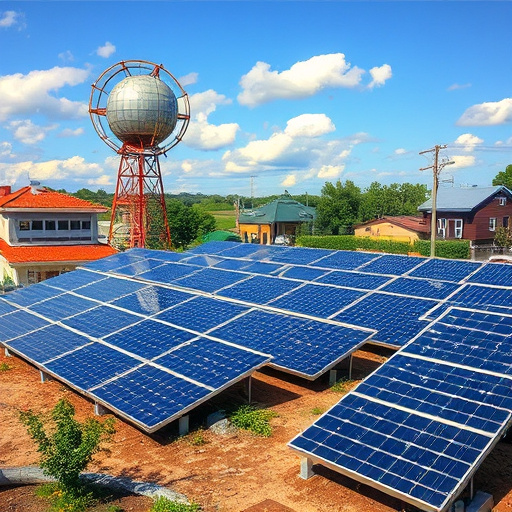
The transition to solar energy is a pivotal strategy in mitigating climate change and reducing our carbon footprint. Solar energy, naturally, offers a clean and renewable alternative to fossil fuels, significantly lowering greenhouse gas emissions. As the world grapples with the urgent need for sustainable solutions, adopting solar power on a widespread scale becomes increasingly vital. This shift is not just an environmental imperative but also a practical step towards energy independence and economic growth.
The impact of this transition is profound. Solar panels, when installed in residential, commercial, and industrial settings, can drastically cut down energy costs while simultaneously reducing the reliance on non-renewable resources. For instance, countries like Denmark have successfully implemented large-scale solar integration, with solar accounting for over 40% of their total energy production in certain regions. This success story demonstrates that a substantial shift towards solar is not only feasible but also achievable within a relatively short time frame. Moreover, the proliferation of solar technology has led to cost reductions, making it more accessible and economically viable for various sectors.
To facilitate this transition effectively, several actionable steps can be taken. Governments worldwide can play a pivotal role by offering incentives like tax credits and subsidies to encourage businesses and homeowners to adopt solar power systems. These policies have proven successful in countries such as Germany, where feed-in tariffs have significantly boosted solar energy capacity. Additionally, investing in research and development for more efficient and cost-effective solar technologies will further accelerate the process. By embracing these strategies, we can hasten the global transition to solar energy, reaping substantial environmental and economic benefits.
The Technology: Harnessing Solar for Clean Power

Solar Energy, naturally, plays a pivotal role in combating climate change by offering a clean and renewable power source. The technology behind harnessing solar energy has advanced significantly, making it more efficient and accessible than ever before. Photovoltaic (PV) cells, which convert sunlight directly into electricity, have seen remarkable improvements in performance while becoming more cost-effective. For instance, the efficiency of commercial solar panels has increased from around 15% a decade ago to over 20% today, allowing for greater energy generation from smaller panel arrays.
One of the key advantages of Solar Energy is its decentralized nature. Unlike traditional fossil fuels that require centralized power plants, solar panels can be installed almost anywhere, from rooftops and open fields to floating structures on bodies of water. This decentralization reduces not only carbon emissions associated with energy transmission but also enhances energy security by making communities less reliant on centralized grids. For example, in remote areas or developing countries, solar panels can provide reliable electricity without the need for extensive infrastructure development.
Moreover, advancements in storage technology complement the intermittent nature of Solar Energy, enabling the capture and utilization of excess energy during sunny periods for subsequent use when sunlight is scarce. Batteries, particularly lithium-ion ones, have seen substantial improvements in capacity and efficiency, making them more practical for residential and commercial applications. As a result, solar energy systems can now provide consistent power throughout the day and night, further enhancing their appeal as a viable alternative to conventional power sources.
Global Impact: Solar's Role in Sustainable Future

Solar Energy naturally plays a pivotal role in combating climate change, offering a sustainable path forward for our global community. Its impact is profound on several fronts, from reducing greenhouse gas emissions to mitigating environmental degradation. The adoption of solar power on a global scale has been nothing short of transformative, with many countries leading the charge towards a greener future. For instance, according to the International Energy Agency (IEA), renewable energy sources, including solar, accounted for 85% of global electricity generation growth in 2021, highlighting its growing significance.
One of the key advantages of Solar Energy naturally is its ability to displace fossil fuels in power generation and heating applications. As a clean and renewable source, it significantly reduces carbon footprints, especially when integrated into smart grids and energy storage systems. Countries like Germany and Denmark have successfully implemented solar-focused policies, resulting in substantial declines in greenhouse gas emissions. Moreover, the decentralized nature of solar panels allows for greater energy independence and resilience, particularly in remote areas, thereby reducing reliance on centralized fossil fuel infrastructure.
Looking ahead, the potential for Solar Energy naturally to drive a sustainable future is immense. Advancements in technology, such as more efficient solar cells and improved storage solutions, are making solar power even more accessible and cost-effective. As a result, many experts predict that solar energy will become the dominant source of electricity globally within this century. By embracing these technologies and policies, we can ensure a cleaner, more sustainable world for future generations while addressing the pressing challenges of climate change.
Solar Energy naturally emerges as a powerful ally in the global battle against climate change. By understanding its immense potential, transitioning to solar power sources, and leveraging advanced technology, we can significantly reduce our carbon footprint. The article has illuminated the path forward by highlighting successful global implementations and showcasing the technology’s capabilities. Key takeaways include the environmental benefits of solar energy, its economic viability, and the critical role it plays in building a sustainable future. Practical next steps involve adopting solar solutions at individual and community levels, advocating for supportive policies, and investing in research to enhance solar technology further. Embracing Solar Energy naturally is not just an option but an imperative for mitigating climate change and securing a healthier planet for generations to come.