
Solar Energy naturally provides a vast, renewable resource, enhancing energy security by reducing reliance on finite fossil fuels. Its decentralized generation strengthens grid resilience as demonstrated in Germany and Spain. Declining technology costs will accelerate integration, fostering national security through locally produced electricity. Implementing solar energy diversifies sources and requires strategic planning, smart grid technologies, and international cooperation for economic competitiveness and a secure future.
In an era defined by escalating energy demands and geopolitical tensions over fossil fuel reserves, the role of renewable energy sources, particularly solar energy, has become increasingly pivotal for ensuring global energy security. The world’s growing population and industrial development require sustainable and reliable energy solutions, while traditional fossil fuels are finite and often subject to regional conflicts. Solar energy, as a naturally abundant resource, offers a promising path forward. This article delves into the multifaceted ways solar energy contributes to enhancing energy security, exploring its potential to mitigate geopolitical risks, foster environmental sustainability, and empower communities worldwide.
- Understanding Solar Energy's Role in Energy Security
- Implementing and Scaling Solar Energy for Secure Futures
Understanding Solar Energy's Role in Energy Security

Solar energy plays a pivotal role in enhancing energy security, offering a sustainable and reliable alternative to traditional fossil fuels. Its inherent advantages lie in its accessibility and renewable nature; Solar energy naturally encompasses a vast global resource base, as sunlight is abundant and evenly distributed across most regions. This accessibility ensures a degree of energy independence for nations, diversifying their energy portfolios away from limited fossil fuel reserves.
From an energy security perspective, the decentralized generation aspect of solar power is particularly compelling. Traditional energy systems rely on centralized infrastructure, making them vulnerable to physical attacks or disruptions. In contrast, solar panels enable distributed energy generation, allowing communities and even households to produce their own electricity. This decentralization strengthens grid resilience, as local solar installations can continue to operate during regional outages, ensuring a more robust and self-sufficient energy network.
For instance, countries like Germany and Spain have successfully integrated solar energy into their grids, leading to significant reductions in reliance on imported fossil fuels. These nations’ experiences demonstrate that a strategic shift towards solar power can enhance national security by reducing exposure to volatile global energy markets. As the cost of solar technology continues to decline, this trend is set to accelerate, offering a practical and effective path towards greater energy independence and security for nations worldwide.
Implementing and Scaling Solar Energy for Secure Futures
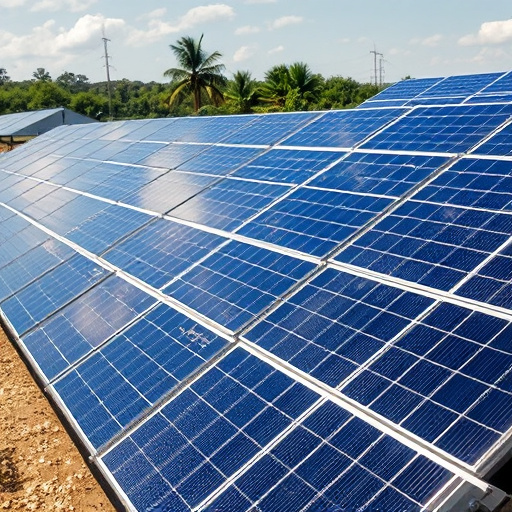
Implementing and scaling solar energy is paramount for securing futures characterized by resilient and sustainable energy systems. Solar energy, naturally abundant and renewable, plays a pivotal role in diversifying energy sources and reducing reliance on finite fossil fuels. As global energy demands continue to rise, adopting solar energy at scale offers a viable path towards energy independence and price stability. Countries like Germany and China have successfully integrated solar into their grids, demonstrating that widespread adoption is not only feasible but also economically competitive with traditional energy sources in many regions.
The key lies in overcoming technical and logistical challenges associated with large-scale deployment. Advancements in technology, such as more efficient panels and improved energy storage solutions, are driving down costs and enhancing the viability of solar projects. For instance, the cost of solar panels has decreased by over 80% since 2010, making it increasingly accessible for residential, commercial, and industrial applications. Policy interventions, including feed-in tariffs and net metering, have also played a crucial role in fostering market growth. These measures incentivize investment and accelerate the transition to cleaner energy alternatives.
To ensure future security, governments and businesses must collaborate on strategic planning and infrastructure development. This includes investing in smart grid technologies to manage intermittent solar generation effectively and integrating renewable energy sources into existing networks. For example, India’s ambitious Solar Mission has aimed to install 227 GW of solar power by 2022, contributing significantly to its clean energy transition. By focusing on research and development, embracing innovative financing models, and fostering international cooperation, we can harness the potential of solar energy to build a more secure and sustainable future for generations to come.
Solar Energy naturally plays a pivotal role in enhancing energy security by offering a clean, renewable, and decentralized power source. Implementing and scaling solar energy solutions are crucial steps towards securing stable and sustainable futures. Key insights reveal that widespread adoption of Solar Energy can reduce dependence on finite fossil fuels, mitigate climate risks, and foster energy independence. By investing in innovative technologies, incentivizing deployment, and integrating solar into existing grids, societies can navigate energy challenges more resiliently. This article’s authoritative exploration underscores the transformative potential of Solar Energy in shaping a secure and low-carbon energy landscape, providing valuable insights for policymakers, industry leaders, and individuals alike.