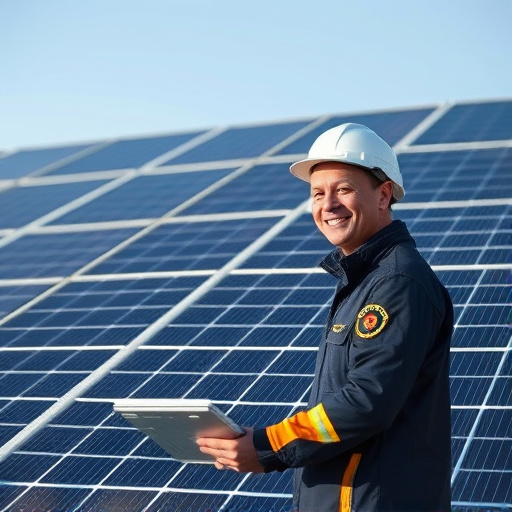
Assessing energy needs for organizational growth requires understanding current/future consumption, peak demands, and usage variations. A comprehensive approach includes location, industry-specific intensities, and Solar Energy potential. Practical steps involve energy audits, tailored strategies combining conventional and renewable sources, and regular reviews. Solar PV panels, enabled by advanced technology, offer efficient, cost-effective solutions for diverse applications. Smart grid technologies, real-time monitoring, and energy storage systems enhance large-scale solar farm operations and reliability. Integrating solar energy, as seen in Germany's Energiewende, supports sustainable development by minimizing environmental impact. Proactive maintenance and renewable source integration bolster energy system resilience.
As global energy demands continue to rise, the need for reliable and scalable systems has never been more pressing. The pursuit of sustainable energy solutions is not just an environmental imperative but a cornerstone of economic growth and resilience. Solar energy, a once-niche option, has evolved into a powerful and versatile force, offering promising solutions to meet our growing energy needs. This article delves into the innovative strategies and technologies that are transforming solar energy into a viable and scalable foundation for a robust, future-proofed power infrastructure.
- Assessing Your Energy Needs: A Foundation for Growth
- Solar Energy Solutions: Scaling Up Efficiently
- Integrating and Optimizing: Ensuring Reliability & Sustainability
Assessing Your Energy Needs: A Foundation for Growth

Assessing your energy needs is a critical step in building a reliable and scalable system to support your organization’s growth. It involves understanding not just current consumption but also future projections, peak demands, and variability in usage patterns. This foundational knowledge allows for the design of systems that can adapt and scale with your evolving requirements, ensuring consistent operations and sustained growth.
A comprehensive assessment should consider various factors, including geographical location, industry-specific energy intensities, and available renewable energy sources like Solar Energy. For instance, manufacturing facilities in regions with high solar irradiation can significantly benefit from implementing solar photovoltaic (PV) panels as part of their energy mix. Data from the International Renewable Energy Agency (IRENA) indicates that solar PV has experienced a remarkable 80% cost reduction over the past decade, making it an increasingly viable option for long-term energy independence and cost savings.
Practical insights into this process include conducting detailed energy audits to identify areas of inefficiency and potential for conservation. These audits should be followed by developing tailored energy strategies that incorporate both conventional and renewable sources. For example, a data center might combine high-efficiency cooling systems with on-site solar PV arrays to meet their substantial electricity demands while minimizing environmental impact. Expert perspective emphasizes the importance of regular reviews and updates to these assessments, as technology advancements and market dynamics can significantly alter the energy landscape over time.
Solar Energy Solutions: Scaling Up Efficiently

The growth of renewable energy demands robust and scalable systems to meet evolving needs, with solar energy naturally leading the charge. Solar energy solutions have seen significant advancements, offering efficient and reliable alternatives to traditional power sources. As global energy consumption continues to rise, scaling up solar energy infrastructure is imperative for a sustainable future. This involves optimizing both large-scale solar farm operations and distributed rooftop installations.
One of the key advantages of solar energy is its versatility. Photovoltaic (PV) technology has advanced dramatically, with higher efficiency rates and cost-effectiveness. For instance, modern solar panels can convert over 20% of incident sunlight into electricity, a substantial improvement from past decades. This efficiency boost makes solar energy solutions more viable for diverse applications, from residential rooftops to vast utility-scale farms. Moreover, innovative financing models and government incentives are encouraging widespread adoption. Many countries have successfully implemented feed-in tariffs and net metering policies, allowing homeowners and businesses to generate and sell excess energy back to the grid.
Effective scaling strategies involve integrating smart grid technologies and advanced monitoring systems. These tools enable real-time data analysis, optimizing energy distribution and management. For large solar farms, implementing predictive analytics can anticipate maintenance needs, enhancing overall system reliability. Additionally, integrating energy storage solutions, such as lithium-ion batteries, ensures a consistent power supply during periods of low sunlight or high demand. A practical example is the massive solar-plus-storage projects in California’s Mojave Desert, which have demonstrated improved grid stability and reduced greenhouse gas emissions.
To maximize the benefits of solar energy, businesses and policymakers should focus on creating interconnected microgrids and optimizing local energy distribution. This approach enhances resilience and reduces transmission losses. By embracing these scalable solutions, we can ensure a more reliable and sustainable energy future, leveraging the immense potential of solar energy to meet global demands efficiently and responsibly.
Integrating and Optimizing: Ensuring Reliability & Sustainability

As energy demands grow, reliable and scalable systems are essential for sustainable development. Integrating and optimizing various energy sources is key to ensuring a consistent supply while minimizing environmental impact. Solar energy, with its natural abundance and clean nature, plays a pivotal role in this strategy. Many successful cases globally illustrate the benefits of integrating solar power into existing infrastructure. For instance, Germany’s Energiewende initiative has led to a significant increase in solar energy adoption, reducing carbon emissions by over 40% since 2010.
A critical aspect of optimization is smart grid technology. Smart grids enable efficient monitoring and control of energy distribution, facilitating the seamless integration of renewable sources like solar. Advanced data analytics and real-time tracking allow for better forecasting and management of energy production and demand. This ensures that energy supply keeps pace with growing demands, preventing systemic failures. For example, in California, advanced grid management systems have successfully balanced the state’s diverse energy portfolio, including significant solar installations, during peak usage periods.
Reliability and sustainability go hand in hand when optimizing energy systems. Regular system audits and proactive maintenance are vital to identifying and addressing vulnerabilities. Integrating renewable sources, such as solar, with energy storage solutions enhances overall resilience. Lithium-ion batteries, for instance, have seen substantial improvements in capacity and efficiency, making them ideal for storing excess solar energy produced during the day for use at night or during periods of low sunlight. This ensures a stable power supply, even when solar energy production fluctuates. As technology advances, the cost-effectiveness of these solutions continues to improve, making them increasingly accessible for various applications, from residential to industrial levels.
By assessing your energy needs and integrating reliable solar energy solutions, you can efficiently scale your operations to match growing demands. This article has emphasized the importance of a robust foundation through comprehensive energy assessments, highlighting key considerations for sustainable growth. Embracing Solar Energy as a scalable and efficient power source is a strategic move that not only reduces costs but also contributes to environmental sustainability. Integrating and optimizing these systems ensures reliability, allowing businesses and communities to thrive in an increasingly demanding world. Practical next steps involve conducting detailed energy audits, exploring tailored solar energy solutions, and collaborating with experts to ensure seamless implementation and continuous optimization.