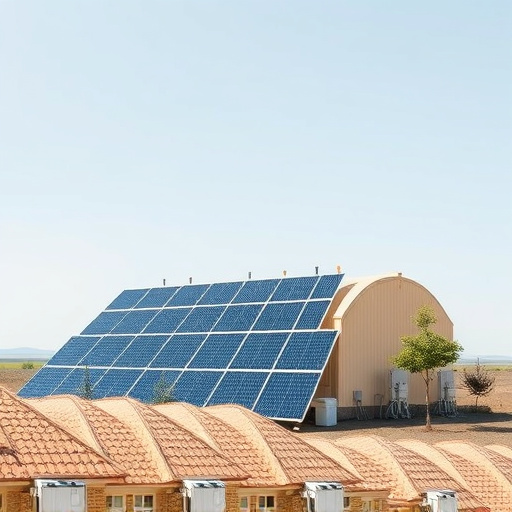
Solar Energy storage is vital for harnessing solar power's full potential as we transition to cleaner energy sources. Key types include battery storage (using advanced lithium-ion technologies), pumped hydro systems, and thermal storage using phase-change materials. Efficient storage bridges the gap between Solar Energy generation and demand, ensuring a stable supply even when sunlight is scarce.
Implementing these solutions offers significant benefits:
Reduced peak demand charges and cost savings (up to 30%)
Enhanced energy independence and grid stability
* Year-round consistent power supply in colder climates
Future trends include advanced battery technologies (like solid-state batteries), flow battery systems, and hybrid storage solutions for longer durations and higher capacities. Overcoming challenges like cost and space through policy incentives and technological advancements will be crucial for maximizing Solar Energy's potential as a sustainable future power source.
The transition to renewable energy sources has gained unprecedented momentum, with solar energy naturally leading the charge. However, maximizing the benefits of solar power requires effective solutions for energy storage. The variable nature of sunlight poses a significant challenge—excess energy generated during sunny periods must be efficiently stored for use during cloudy or nighttime hours. This article delves into cutting-edge solar energy storage technologies designed to address this critical issue. By exploring innovative approaches, we aim to provide valuable insights and contribute to the advancement of sustainable energy practices.
- Understanding Solar Energy Storage: The Foundation
- Types of Solar Energy Storage Systems
- Designing an Efficient Solar Energy Storage Solution
- Implementing Storage for Optimal Solar Power Utilization
- Benefits and Challenges in Solar Energy Storage Adoption
- Future Trends Shaping Solar Energy Storage Solutions
Understanding Solar Energy Storage: The Foundation

Solar energy storage plays a pivotal role in maximizing the utilization of solar power, especially as we transition towards cleaner and more sustainable energy sources. Understanding the fundamentals of solar energy storage is crucial for both residential and commercial applications, enabling efficient management of intermittent solar generation. This section delves into the core concepts, offering insights that underscore its significance.
At its essence, solar energy storage involves capturing the excess solar energy produced during periods of high irradiation and converting it into a form that can be utilized later when sunlight is scarce. Traditionally, this has been accomplished through various technologies such as batteries, pumped hydro systems, and thermal storage. For instance, residential homeowners can employ lithium-ion batteries to store excess energy generated during the day for use at night or during cloudy days. This ensures a steady power supply, reducing dependence on conventional grid electricity.
The benefits of solar energy storage are multifaceted. Firstly, it enhances energy independence by allowing consumers to produce and consume their own electricity more efficiently. Secondly, it contributes to grid stability by balancing the variability inherent in renewable sources. According to recent studies, solar energy storage systems can help reduce peak demand charges by up to 30%, offering significant cost savings for businesses and households alike. For instance, a commercial building equipped with a large-scale battery system can store energy during off-peak hours, discharging it during peak demand periods, thereby optimizing energy costs.
As the global push towards renewable energy intensifies, ongoing advancements in storage technology are expected to further streamline solar energy integration. Expert analysts predict that improved battery efficiency and reduced costs will make storage systems more accessible, encouraging wider adoption. By embracing these innovative solutions, we can unlock the full potential of solar energy, transitioning smoothly to a sustainable future powered by clean, reliable sources.
Types of Solar Energy Storage Systems

The efficient utilization of solar energy hinges on robust storage solutions that maximize the benefits of this renewable resource. Solar energy storage systems play a pivotal role in addressing the intermittent nature of sunlight, ensuring a steady power supply even when the sun is not shining. These systems capture and store excess solar energy produced during periods of high irradiation for later use, thereby bridging the gap between energy generation and demand.
There are primarily three types of solar energy storage systems: battery storage, pumped hydro storage, and thermal storage. Battery storage, the most prevalent and rapidly evolving option, employs advanced technologies like lithium-ion batteries to store energy in chemical form. This versatile system can discharge power during peak demand or when sunlight is scarce, making it ideal for both residential and utility-scale applications. For instance, Tesla’s Powerwall offers a compact, home-based solution, while larger-scale battery systems like the ones developed by Enel and Sonnen provide backup energy for communities and businesses.
Pumped hydro storage leverages the gravitational potential of water to generate electricity. By pumping water uphill during periods of excess solar generation, this method stores energy in the form of potential energy, which can be converted back into electrical power when needed. Although primarily suited for large-scale projects due to its substantial infrastructure requirements, pumped hydro storage offers a clean and efficient means of energy storage with an estimated global capacity of over 130 gigawatts as of 2022.
Thermal storage systems, another crucial category, absorb solar heat during the day and convert it into usable thermal energy for space heating, water heating, or industrial processes at night or during cloudy periods. Technologies such as phase-change materials (PCMs) and concrete storage offer cost-effective solutions with long lifetimes. For example, SunPreme’s thermo-chemical storage system utilizes a heat transfer fluid to capture solar heat, enabling the production of hot water or space heating when required.
Designing an Efficient Solar Energy Storage Solution

Designing an Efficient Solar Energy Storage Solution requires a strategic approach to maximize the benefits of solar energy. Firstly, assessing site-specific conditions is paramount. Factors such as sunlight availability, temperature patterns, and local climate play a pivotal role in determining the optimal storage system. For instance, regions with consistent high sunlight exposure offer greater opportunities for efficient solar energy capture and subsequent storage.
Advanced battery technologies form the backbone of effective solar energy storage solutions. Lithium-ion batteries, renowned for their high energy density and longevity, are increasingly favored in residential and commercial setups. Leading manufacturers like Tesla and LG offer sophisticated systems with modular designs, allowing for scalability based on specific energy needs. According to a 2021 industry report, the global lithium-ion battery capacity for solar PV systems is projected to grow at a CAGR of over 35% between 2022 and 2030, underscoring their growing dominance in the market.
Implementing smart grid technologies enhances the efficiency and management of solar energy storage. These systems enable real-time monitoring, allowing users to optimize energy consumption and distribution. For example, integrating solar panels with advanced inverters and microgrids can facilitate bidirectional energy flow, enabling excess solar energy to be stored or sold back to the grid during peak demand periods. This not only maximizes self-sufficiency but also reduces overall energy costs for consumers.
Moreover, employing thermal storage solutions—such as hot water tanks or molten salt systems—is a strategic move for year-round efficiency. These technologies capture and store heat from solar energy, which can be utilized during periods of low sunlight, ensuring a consistent and reliable energy supply. For instance, in colder climates, thermal storage can prevent the need for backup heating sources, further enhancing the overall sustainability of solar energy systems.
Implementing Storage for Optimal Solar Power Utilization

Implementing storage solutions is a strategic move to maximize the benefits of solar energy, ensuring a steady and reliable power supply, especially during periods of low sunlight or at night. Solar energy naturally fluctuates based on weather conditions and time of day, which can lead to intermittent availability. This is where storage systems play a pivotal role in optimizing the use of solar power. By storing excess energy generated during sunny periods, consumers can tap into this stored energy when solar production is low, effectively bridging the gap between supply and demand.
The most common type of storage technology used in conjunction with solar panels is lithium-ion batteries. These batteries offer high energy density, efficient charging, and discharging capabilities, making them ideal for residential and commercial solar installations. For instance, a study by the U.S. Energy Information Administration (EIA) found that households with solar panels and battery storage systems had lower electricity bills during peak demand periods compared to those without storage. On average, these homes saved approximately 10% on their daily energy costs. As solar installations become more widespread, advanced energy storage technologies are emerging, promising higher capacities and longer lifespans, further enhancing the efficiency of solar energy utilization.
Practical implementation begins with assessing individual energy needs and available budget. For homeowners, a combination of roof-mounted solar panels and a residential battery system can provide significant savings. Businesses and larger facilities may opt for more sophisticated storage solutions, such as grid-scale batteries or pumped hydro systems, which can store energy on a much larger scale. The key to optimal utilization lies in balancing the capacity of the storage system with the property’s energy demands, ensuring that stored solar energy is efficiently deployed throughout the day. Regular maintenance and monitoring of these systems are essential to maximize their lifespan and performance.
Benefits and Challenges in Solar Energy Storage Adoption

The widespread adoption of solar energy has been a game-changer in the transition towards sustainable power sources. However, maximizing the benefits of this renewable resource requires effective solar energy storage solutions. Storage technologies play a pivotal role in addressing the inherent intermittency of solar power generation, enabling consistent energy supply even when the sun is not shining. This capability is crucial for integrating solar energy into existing power grids and ensuring a reliable energy mix.
Despite its immense potential, the adoption of solar energy storage faces several challenges. One major hurdle is cost, with various storage technologies still bearing a significant price tag. This financial barrier can be a deterrant, especially for smaller-scale installations or developing regions. Additionally, space requirements for storage systems, particularly for larger-scale applications, present another challenge in densely populated areas. Yet, the benefits far outweigh these obstacles. Advanced battery storage systems, such as lithium-ion batteries, offer efficient and flexible energy storage, enabling quick response to fluctuating solar output. For instance, a study by the International Energy Agency (IEA) revealed that integrating large-scale battery storage with solar PV systems can reduce energy costs by up to 20% while improving system reliability.
To overcome these challenges, a combination of policy incentives and technological advancements is crucial. Governments can play a pivotal role in promoting solar energy storage through subsidies, tax benefits, and grid-scale incentives. These measures encourage the deployment of storage systems while mitigating financial risks for early adopters. Furthermore, continuous research and development efforts should focus on enhancing existing technologies and exploring innovative solutions like flow batteries or compressed air storage. As the world navigates the complexities of climate change, leveraging solar energy storage becomes not just an option but a necessity for a sustainable future.
Future Trends Shaping Solar Energy Storage Solutions

The future of solar energy storage is poised to revolutionize how we harness and utilize renewable power, offering a sustainable path forward for a greener energy landscape. As global efforts to combat climate change intensify, the need for efficient and scalable solar energy storage solutions has become increasingly critical. This evolution is driven by the inherent advantages of solar energy—abundant, clean, and naturally replenishable—but its intermittent nature presents challenges that advanced storage technologies aim to overcome.
Trends shaping the future of solar energy storage include advancements in battery technology, particularly lithium-ion batteries, which are becoming more efficient, compact, and cost-effective. The development of solid-state batteries promises higher energy densities and improved safety compared to their liquid counterparts. For instance, recent breakthroughs have led to lithium-sulfur batteries with enhanced cycle life and power output, making them promising candidates for large-scale solar energy storage applications. Additionally, the integration of smart grid technologies enables more efficient management and distribution of stored solar energy, optimizing its utilization during peak demand periods.
Another significant trend is the emergence of flow battery systems, which store energy in liquid electrolytes. These systems offer long-duration storage capabilities, making them suitable for balancing intermittent solar energy production with base load demands. As research progresses, flow batteries could provide a cost-effective solution for grid-scale energy storage, ensuring a stable and reliable power supply. Furthermore, the development of hybrid storage systems, combining multiple technologies like batteries and pumped hydro storage, is gaining traction. These hybrids offer flexibility and adaptability, addressing various energy storage challenges posed by solar energy’s inherent variability. By leveraging these future trends, the solar energy sector can maximize its potential, providing a clean and sustainable energy solution for generations to come.
Solar energy storage solutions are pivotal to maximizing the benefits of solar power, ensuring consistent energy supply, and reducing reliance on traditional grids. By understanding the various types of storage systems, designing efficient solutions tailored to specific needs, and adopting practical implementation strategies, we can fully harness the potential of solar energy. The article has highlighted the key advantages, including cost savings and environmental sustainability, while acknowledging challenges such as initial investment and technological complexity. Looking ahead, future trends suggest advancements in battery technology, grid integration, and decentralized storage, promising a more efficient and accessible solar energy landscape. These insights empower readers to make informed decisions, drive adoption, and contribute to a renewable future powered by Solar Energy.